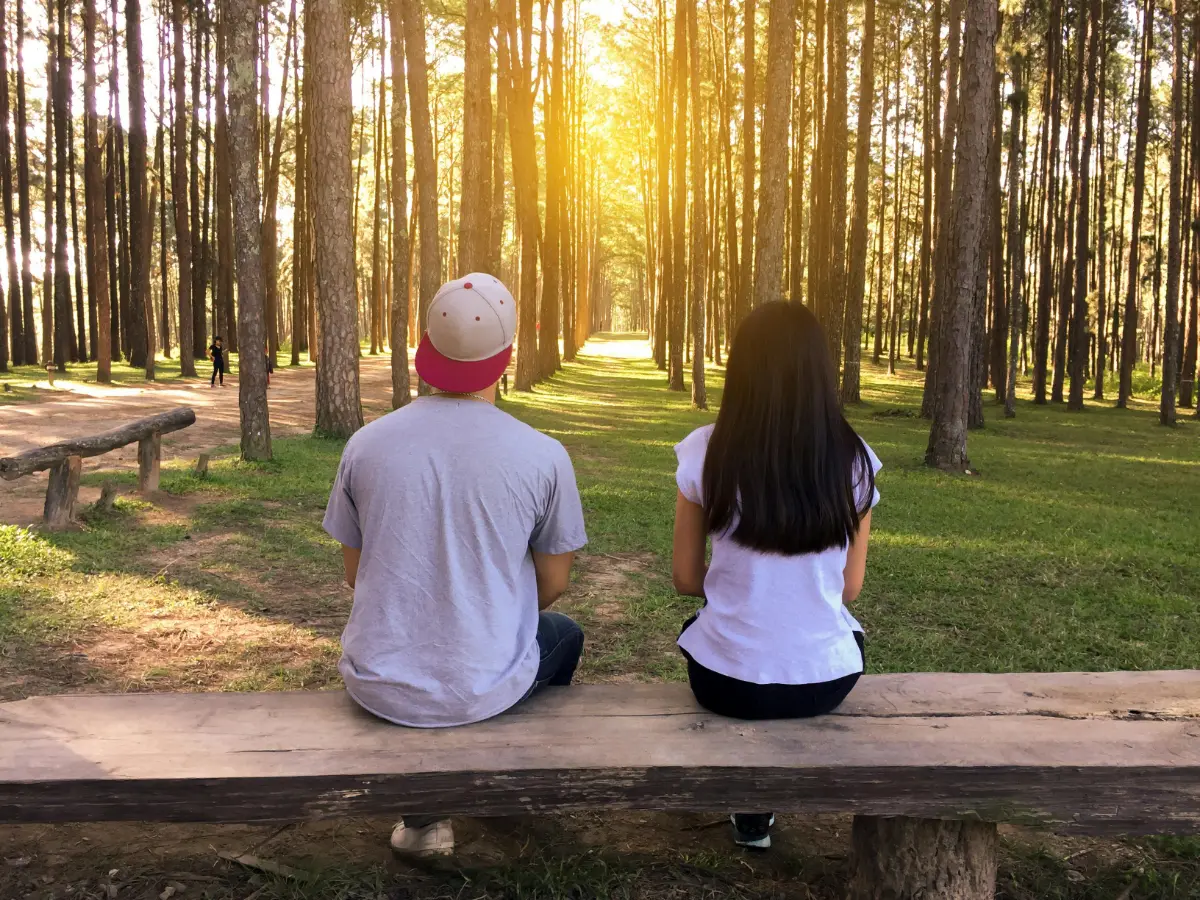
A park bench makes a modest promise: somewhere to sit, a different view, perhaps a little distance from the demands of the day. The wellness industry often adds a much larger one. Time among trees is presented as a nervous-system reset, sometimes with a precise number of minutes attached. Research offers a more interesting story than either a miracle cure or an empty cliché.
A substantial review published this year strengthens the case for taking nature seriously as part of psychological well-being. It also exposes a question that upbeat headlines often skip: when people feel better after a nature-based activity, how much of the improvement comes from the setting itself?
What the latest review adds
Published on May 28, 2026, a systematic overview in Nature Human Behaviour brought together 116 systematic reviews, with 30 included in its statistical synthesis of review-level findings. Across diverse interventions and comparison groups, the researchers reported improvements in outcomes including anxiety, depressive symptoms and positive mood.
That breadth is useful: the evidence extends beyond one appealing experiment. But the authors highlighted two limitations. Definitions of nature-based interventions varied, and comparison groups were frequently passive. Comparing an outdoor programme with waiting or doing nothing cannot establish whether nature adds something beyond exercise, companionship, structured attention or a welcome break.
This is a distinction between two worthwhile questions. Does an organised activity help people? And does its natural setting make it more helpful than an otherwise comparable activity? A programme can succeed on the first question while leaving the second unresolved. Pooling more research does not automatically repair that gap in the original experiments.
A narrower 2025 systematic review in BMJ Open examined programmes for adults with anxiety, depression or stress. Its 19 articles included 1,901 participants and interventions ranging from therapy gardens to activities in parks and forests. Anxiety and depression scores improved in pooled before-and-after analyses, but all GRADE assessments rated the certainty of evidence as very low. The pooled change in stress was not statistically clear.
Before-and-after improvement deserves attention, yet it is not equivalent to improvement caused by the programme. Symptoms can change over time, and participants may receive other support. Differences in study design, programme content and risk of bias make a single headline estimate difficult to translate into expectations for an individual. These findings support further investigation; they do not establish a replacement for clinical care.
A brain finding is not the same as feeling better
One experiment helps narrow the question. In a study published in Molecular Psychiatry on September 5, 2022, 63 healthy adults completed a one-hour walk in either a Berlin forest or a busy urban street. Researchers measured brain responses before and afterwards. Assignment balanced factors including sex and time of day; both groups walked, making this more informative about setting than a comparison with staying indoors.
Activity in the amygdala, a region involved in processing emotionally significant information, decreased after the forest walk and remained stable after the urban walk. Yet the study found no significant difference between the groups' changes in self-reported measures or physiological stress indicators. Participants did rate the nature walk as more restorative and enjoyable.
The distinction matters. An imaging result can suggest a possible mechanism without demonstrating lasting relief from distress. This was a small study of healthy adults, measuring an immediate response. It cannot establish that an hour in a forest treats depression, nor that urban walking damages the brain. The urban group's amygdala response did not increase.
Why there is no magic number of minutes
The familiar two-hour target comes partly from a Scientific Reports study published on June 13, 2019. Using survey data from 19,806 adults in England, researchers found that people reporting at least 120 minutes of recreational nature contact in the previous week were more likely to report good health and high well-being than people reporting none.
This was an observational, cross-sectional study, not a trial assigning people different weekly doses. Healthier or happier people may have found it easier to get outside. The authors also warned that grouping reported time into categories could help produce an apparent threshold. Their finding was a starting point for research, not evidence that 119 minutes fails and 120 minutes works.
For public discussion, a more useful question may be what makes contact with nature possible and welcome. A nearby park with a seat offers a different proposition from a forest reached only by car. Step-free paths, shade, transport and a sense of safety determine who can realistically use a space. Telling everyone to spend more time outdoors can obscure those practical differences.
The evidence leaves room for ordinary enjoyment without turning it into another performance target. Someone can value a quiet garden without calculating a therapeutic dose or expecting a measurable change in brain activity. Nature deserves serious attention in research and in the design of everyday places. Its value does not depend on promising that a walk will fix whatever someone carries into it.