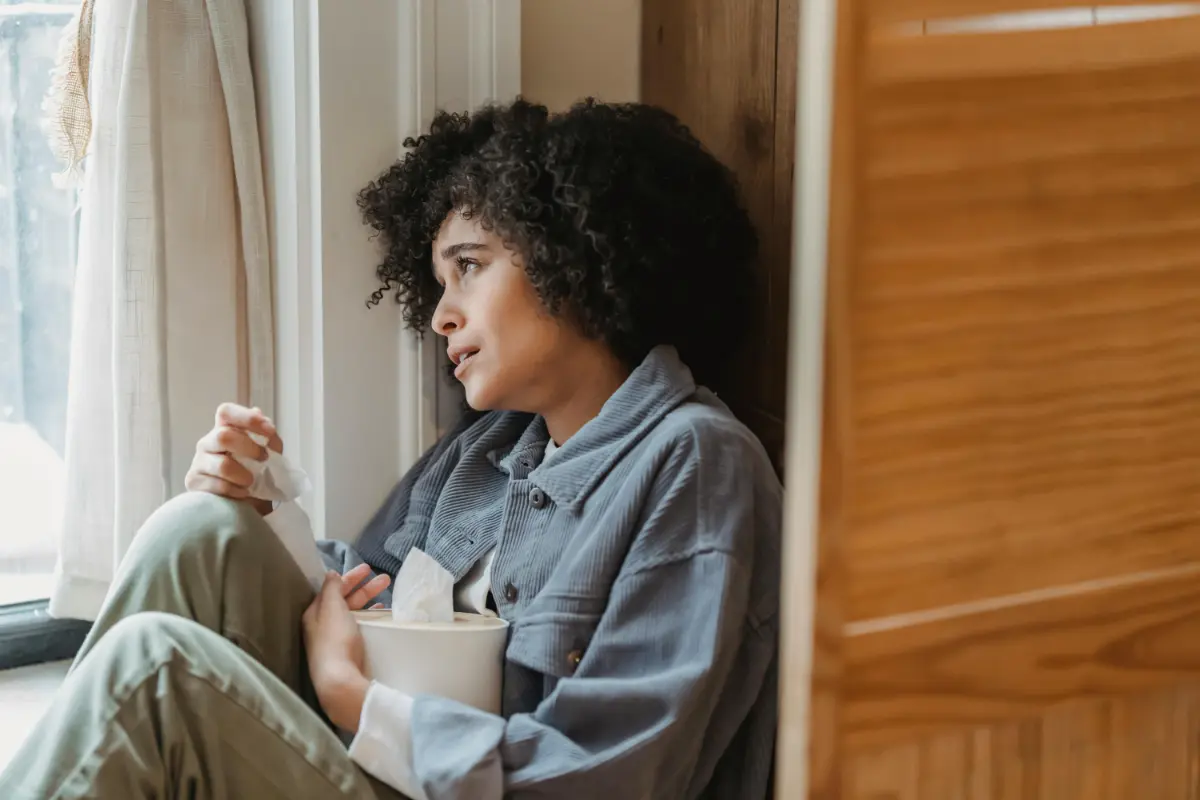
A friend sends a warm message, and answering feels like work. A small success barely registers. Nothing dramatic has happened, yet the day seems to have lost some of its colour. These are everyday experiences, not diagnostic signs. They also illustrate a question that sleep research has made increasingly hard to ignore: what happens when tiredness changes not just our energy, but our emotional experience?
The familiar picture of sleep deprivation is someone irritable and short-tempered. The evidence is more interesting than that. Reduced pleasure and changes in social responses deserve attention alongside anger. Understanding that distinction offers a less moralising way to think about a difficult day, without turning sleep into an explanation for everything.
Less joy is not simply more sadness
A systematic review published in Psychological Bulletin in 2024, led by Cara Palmer and colleagues, combined 154 experimental studies involving 5,717 participants. Researchers had deliberately reduced sleep through overnight deprivation, shorter sleep opportunities or repeated awakenings. Across these forms of sleep loss, the analysis found reductions in positive feelings and increases in anxiety symptoms.
The findings were less uniform for negative feelings and depressive symptoms: results depended on how sleep was disrupted. That matters because emotional life is not a single dial running from happy to sad. A reduction in enthusiasm is not interchangeable with an increase in distress.
These experiments offer stronger evidence of short-term causation than surveys showing that tired people report worse moods. But the studies involved healthy populations, and an experimental change in anxiety symptoms is not the same as developing an anxiety disorder. Nor does the review establish that an emotionally flat afternoon is caused by poor sleep in any particular person.
For readers, the distinction is useful precisely because it resists a neat label. “I am not enjoying this much today” describes an experience. “I have become an unhappy person” makes a much larger claim. Research can help keep those two statements apart; it cannot decide which explanation fits a stranger's life.
The social effects deserve a careful reading
Sleep may also affect the space we want between ourselves and other people. In a 2018 Nature Communications study, Eti Ben Simon and Matthew Walker tested 18 healthy young adults after normal sleep and after a night without sleep. Participants preferred greater distance from an approaching person when sleep-deprived.
A separate observational part of the same research followed 138 people across two nights. Changes in reported sleep quality were associated with changes in next-day loneliness. Unlike the laboratory manipulation, that association alone cannot establish which factor caused the other.
The small laboratory sample and extreme sleep-loss condition limit how confidently its findings translate to ordinary working weeks. The study does not show that every tired person withdraws, or that extra sleep resolves persistent loneliness. It does suggest that social responses can vary with physical state, rather than reflecting only personality or relationship quality.
The US National Heart, Lung, and Blood Institute likewise identifies difficulties judging other people's emotions and reactions among the possible consequences of sleep deficiency. Its definition is broader than too few hours: poorly timed sleep, poor-quality sleep and sleep disorders also belong in the picture.
One reasonable interpretation is that a strained interaction may have more context than either participant can see. That is not an excuse for unkindness, and it does not invalidate genuine disagreement. It is a reason to be cautious about treating a single exchange as a definitive verdict on a relationship.
A health need, not another performance target
The Centers for Disease Control and Prevention's sleep guidance distinguishes sleep quantity from quality. For adults aged 18–60, it lists seven or more hours as the general daily recommendation, while noting that refreshing, uninterrupted sleep matters too. Repeated awakenings or feeling tired despite sufficient hours can indicate poor sleep quality.
Crucially, the CDC also recognises that sleep disorders can prevent adequate sleep regardless of effort. That makes “just sleep more” an inadequate response to someone struggling. A population recommendation is background information, not an individual treatment plan, and the research reviewed here cannot identify the cause of someone's sleep difficulties.
There is also an editorial lesson in how this evidence is communicated. Turning every restless night into a warning about damaged relationships would replace one oversimplification with another. Neither an occasional bad night nor a day of low enthusiasm warrants a sweeping conclusion about mental health.
The more useful message is modest: sleep belongs in the conversation about emotional life, alongside the circumstances of that life. It is neither a character test nor a universal remedy. Taking it seriously means allowing for its influence without asking it to explain everything.